
‘The State of Maternity Services in England’
J*DI logo by Ken Howard – with huge thanks from the #MatExp gang!
We are delighted today to see #MatExp ‘Whose Shoes?®’ included so prominently in the ‘The State of Maternity Services in England’ policy document published this morning by the Picker Institute as an example of using ‘patient’ experience information for service improvement. You can read it here: http://www.pickereurope.org/news/new-policy-briefing-state-maternity-services-england/
This is a testament to the many women, families and health care professionals across all disciplines and grades that have come together the with the common purpose of improving maternity experience and we would like to extend a massive thank you to the many people who have come on board, worked tremendously hard on a voluntary basis and made #MatExp what it is.
There are so many people who have contributed massively that we are not going to name individuals as where would we stop? But a special mention must go to ‘Can do’ Kath Evans @KathEvans2, Experience of Care Lead, NHS England as the project would not even have got off the ground without her ‘Just Do It’ support – more about J*DI anon!
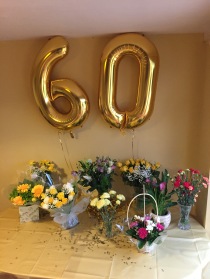
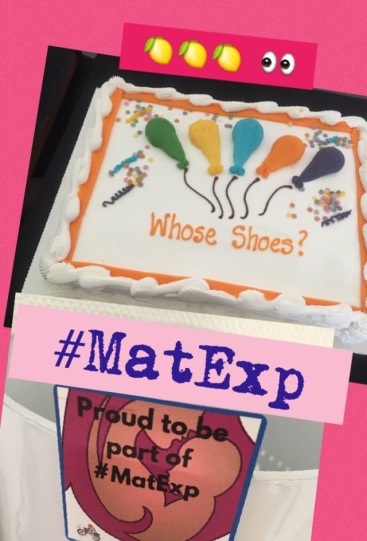 So, it feels very appropriate that this recognition coincides with #MatExp’s 2nd birthday.
And luckily the fabulous cake we enjoyed at our event in Manchester on Monday is big enough for you all to share. 😉
How much can be achieved in two years?
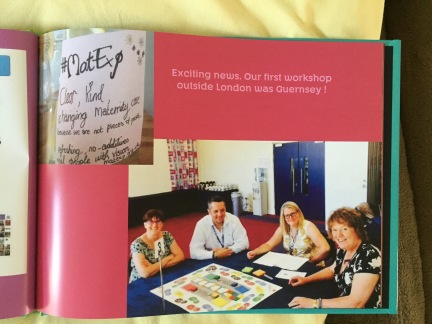
The answer is a phenomenal amount if you set your mind to it! It is almost two years to the day since we (Flo and Gill, the co-founders of #MatExp) met in person for the first time, on 31st July 2014. As many of you know we don’t mess about; we get on with things and by October 2014 we held our first #MatExp ‘Whose Shoes’ workshop at Kingston Hospital NHS Trust as the first of five pilots for the London Maternity Strategic Clinical Network.
We never could have envisaged not only the runaway success of the ‘Whose Shoes’ #MatExp workshops, which are spreading far and wide (18 to date)…
… but also the immense enthusiastic activity growing alongside, first on Twitter and subsequently via blogs, Facebook, Pinterest, Steller stories, the #MatExp website … the list goes on.
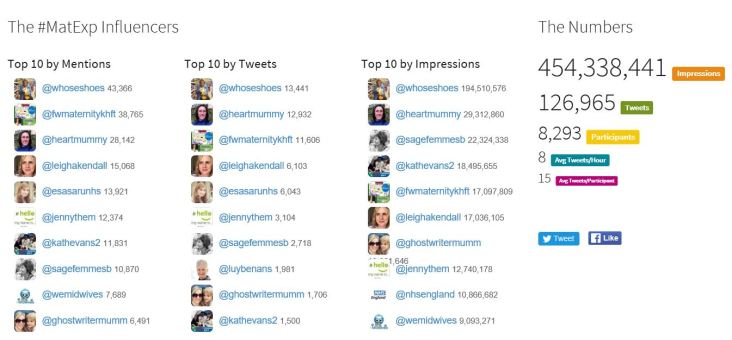
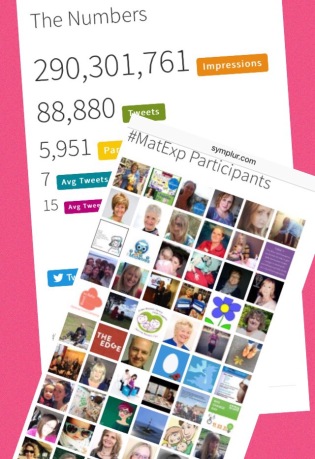
 As a result, we discovered that we had built a globally recognised change platform by accident – with 454 million Twitter impressions and rising consistently with about one million new impressions every single day.
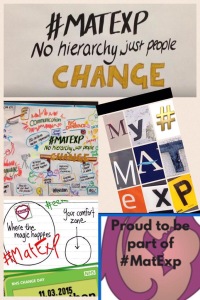
#MatExp is simple and inclusive. ‘No Hierarchy Just people’ is just one of our mantras, emphasising the importance of listening and respecting all ideas and views equally: it doesn’t matter who you are, we are all people who want to improve maternity services together. Another favourite is ‘Wrong is wrong even if everyone is doing it; right is right even if no one is doing it’, and possibly our favourite is J*DI, Just Do It!
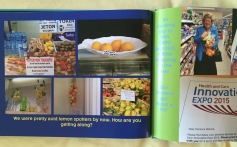
Amongst all this we have had two years of enormous fun with #MatExp ABC; an advent calendar of actions including this lovely song ‘crowd-sung’ by #MatExp Mums; #MatExp on tour, lemons, cake, new friends, starfish and much more. All underpinned by the powerful #MatExp heart values.
So what is coming up next?
 The work is far from done. We are currently working on our exciting new ‘Nobody’s patient’ project, funded by the NHS Challenge fund as well as building on all the original work through new collaborations and workshops. The never ending random ideas and actions that make #MatExp such fun continue unabated – for example Gill is currently on a bit of a roll with her film director hat on …
… and Flo is busy compiling the required monthly reports for NHS England using Steller stories.
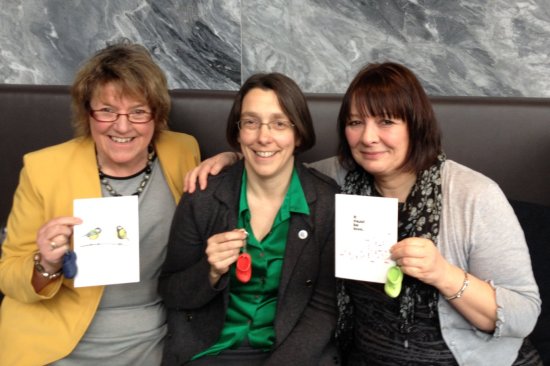
Last week we attended the Maternity Transformation launch meeting Sarah-Jane Marsh (and dazzling her with our stealth super-tactic: matching #MatExp necklaces).
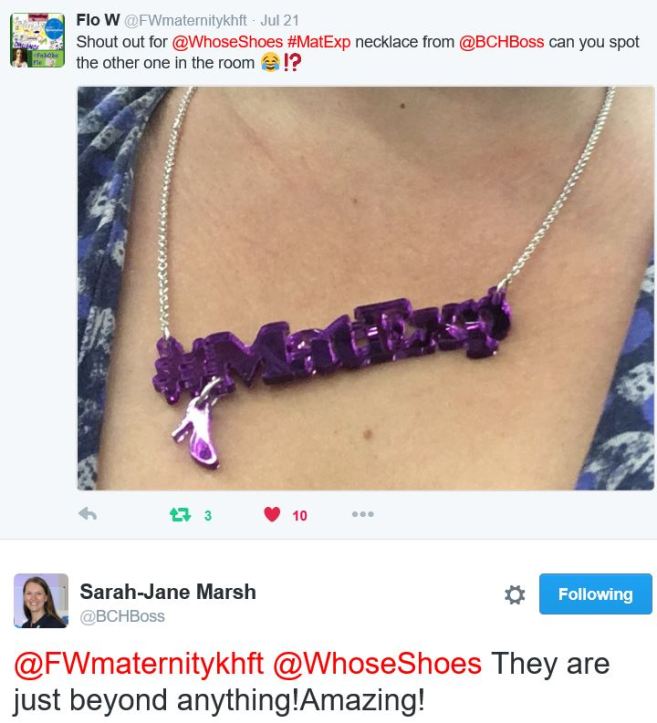 We hope to be collaborating & contributing plenty to this work over the next five years. One key objective is to make our dream of a #MatExp Bazaar come to life. We are looking forward to spreading the word about #MatExp at NHS Expo (7 September) and at the King’s Fund (3 November). We will be hosting a special competition with a coveted prize, which will be announced at Expo. Whoop! Whoop!
As Flo wrote in (at the time!) her ‘one and only blog’ in Feb 2015 …
“The beauty of #MatExp is anyone can do anything, however big or small, whoever you are: user, partner, community group or NHS staff” – and so many actions have followed, as more and more people make pledges at the workshops and get involved through social media.”
Here is the book of case studies of some key actions from the very first workshops: http://www.londonscn.nhs.uk/publication/involving-service-users-for-quality-improvements-in-maternity/
There is also an extremely positive evaluation of the five pilot workshops by the London Strategic Clinical Network. The report highlights that:
“93% of attendees said that the workshop changed the way that they think about maternity services and have spoken about seeing situations from new perspectives, thinking differently and reframing their actions.”
The prescient words Flo wrote in her ‘first and only blog’ (she has since written loads, including a cover story in the RCOG magazine) at this time continue to resonate and inspire:
“The sky is limit! Imagine if we designed maternity care from scratch what would it look like? Would it even be called maternity? How about transition to parenthood? Every action we each take, however small, keeps the #MatExp conversation going and makes a small improvement. If we all take action together, we have huge potential to improve maternity services and an experience that has an impact of us all.”
So whilst celebrating our inclusion in today’s policy document our hope is that it will spur people on to believe they too can make a change. Jump in and join us, take action to improve maternity experience and you never know we might see you all at the #MatExp Bazaar by this time next year!
Meanwhile, please help yourself to a slice of lemon cake…
Happy 2nd  Birthday #MatExp!
With love from:
Florence Wilcock is Consultant Obstetrician, Kingston Hospital NHS Foundation Trust and Chair of London Maternity SCN Experience Subgroup @FWmaternitykhft
Gill Phillips is the creator of Whose Shoes?® @WhoseShoes
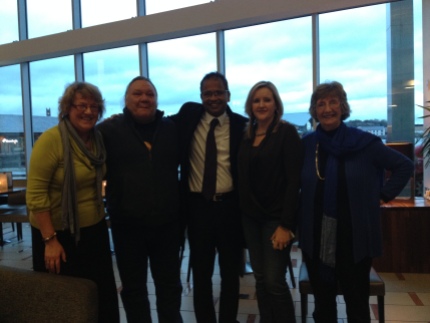


 I had all sorts of ideas about how I might mark my 60th birthday in terms of social media. I loved #60yearsoflearning by @ShirleyAyres; I loved @AnnieCoops’ photos over the years to mark her 50th;
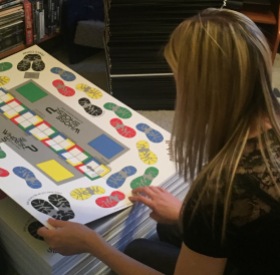
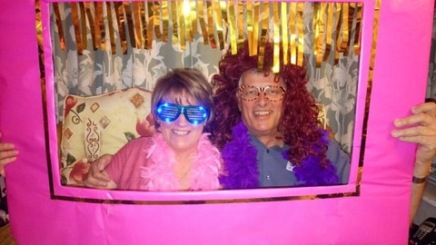 A big hit at the party was a cardboard frame that my friend Sarah, who made the mistake of arriving ten minutes early, knocked up with her children for people to take photos!
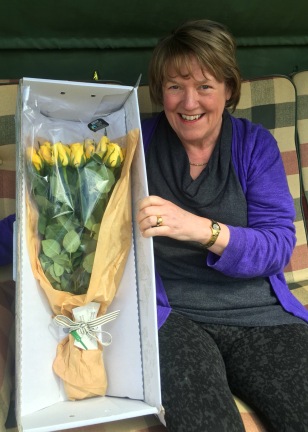
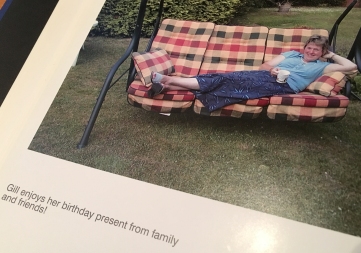 My friends had clubbed together to buy me a swing seat for the garden and I still love it. Like the sea, it is one place where I can totally relax.
 I am thrilled that I had the courage to refuse to be undermined or for my creativity to be held back: I jumped ship in 2008, escaped a culture of big egos and pointless meetings, and set up something with the potential to really make a difference. Something exciting to stop me clucking over the children as they moved on… 😉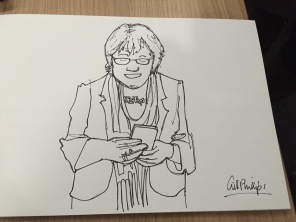
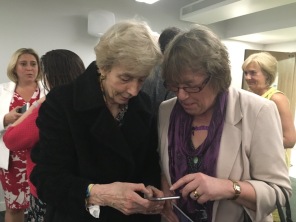
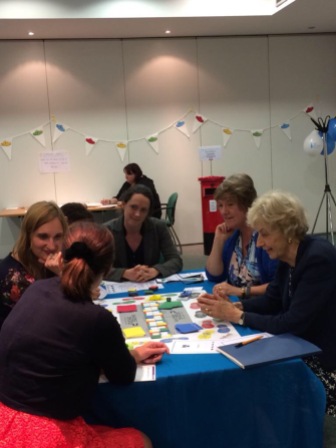
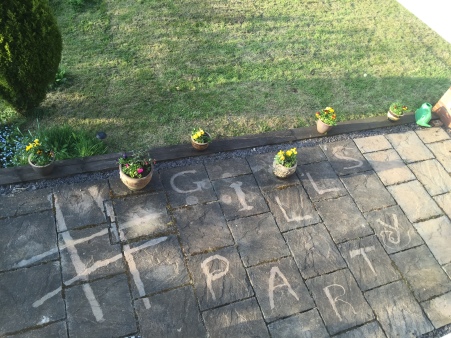

 My mum has become a little bit of a celebrity on Twitter, tweeting and blogging as @Gills_Mum. At my party, she knew quite a few of my Twitter friends in real life, which is brilliant. we toasted friends and absent friends. At the end of the party Theresa, my ‘oldest’ friend, since the age of 11, took her back home and sat and chatted with her having tea until 1.30am! They apparently had a lot to catch up on. I hope I will make it to 94 and will be like that.
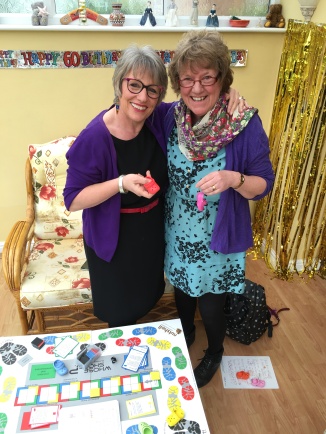 I am doing some random things to celebrate my birthday. I spent a lovely day on Monday with Lisa Rodrigues. We have only previously had snatched conversations, but yet she travelled up from Brighton to Rugby and we spent the whole day together and could still be talking now! So many ideas to share and explore!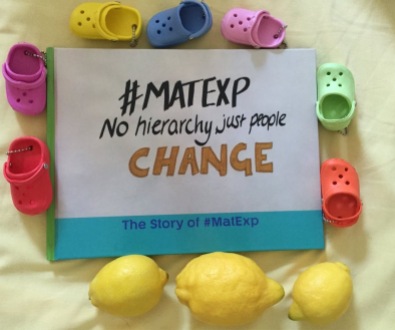
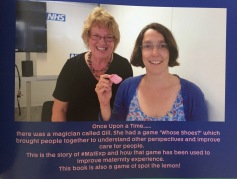
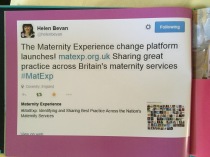
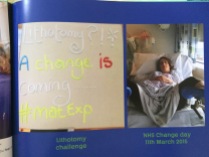
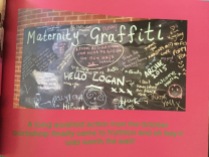


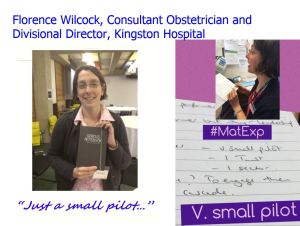 #MatExp began as ‘one small pilot’ and is now a national grassroots movement. Whilst Every Birth a Safe Birth is very much at the embryonic stage, I’ve found that as I step out things can snowball beyond what I originally envisaged.



 Volunteers have also been stepping forward to set up and run the weekly #MatExphour chat, re-jigging and keeping the show on the road when people are not available at the last minute: just making it happen. Running campaigns. Speaking at events.Supporting each other. Inspiring each other. Leading real change and becoming impatient with traditional events and conferences which sometimes include a lot of … seasoned conference goers.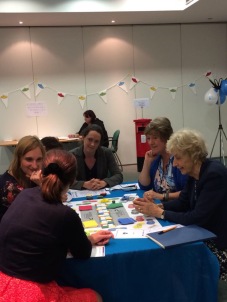
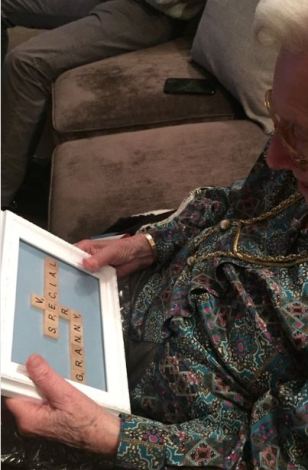 Lots of people have missed updates from ‘Gills Mum’ and asked how she is getting on – especially since her dramatic escape from hospital –
  Well, over Christmas all the lemons have aligned:
 What a lovely Christmas with all the family, a new baby, two delightful dogs and two lovely cats! I am so lucky. They all really look after me.


 Whose Shoes? A catalyst for change in health and social care